Work
From configuration into manufacturing
For Technics & Applications I worked on a configuration solution for pool covers.
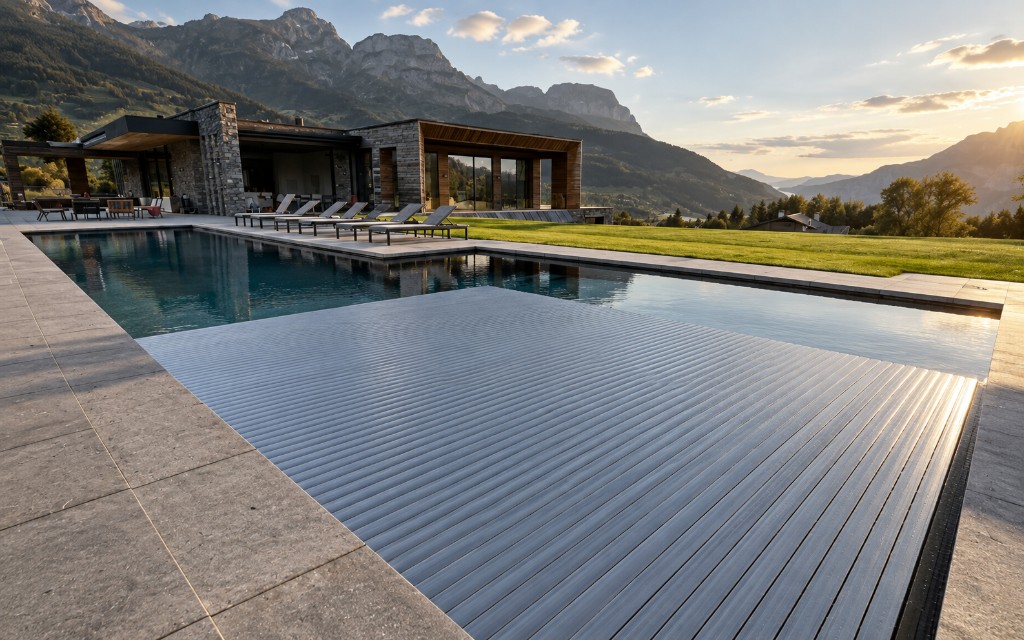
What makes this project interesting for me is that the configuration does not stop at a quotation or a 3D model. The calculations continue into manufacturing.
The product
Pools are far from always rectangular.
Fillets, curves and other shapes mean the slats of a cover do not all have the same length. Each slat has to be calculated to the right size and produced in the right sequence.
The motorised system comes on top of that.
Slat lengths and CNC order from configuration — CPQM
Why CPQ is not enough here
In classic CPQ the emphasis often sits on choosing, pricing and quoting.
Here the product logic went further.
The configuration did not only determine what was sold. It also delivered the information with which the slats could be cut to size, in sequence, on CNC.
That is why I prefer the word CPQM for this kind of system: Configure, Price, Quote, Manufacture.
Not because another abbreviation is needed, but because it marks an important difference. The product knowledge is not translated again for production. It continues.
The interesting layer
The real value is not in one formula for the length of a slat.
It sits in the model that knows which shape the pool has, how that shape is divided, which sequence is needed, and which data manufacturing finally needs.
That is the same problem I still find interesting today: how do you keep product knowledge from spreading across sales, CAD, spreadsheets and production?
What I take from this kind of project
A configurator becomes much stronger when you do not only look at it as a sales tool.
If engineering and manufacturing can use the same product logic, a whole layer of double work and interpretation disappears.
That idea comes back today in my work around product models and configuration.